Is a Niche Job Board Worth Building? Here Is the 2026 Math

One public company runs the cleanest experiment anyone has published on this question. In 2025, DHI Group's general tech board Dice booked $72.9 million and fell 17 percent. Its sibling ClearanceJobs, which serves people holding one credential, booked $54.9 million and grew. Same owner, same market, same year. Below is what that gap means for anyone deciding whether to build a niche job board, the arithmetic on what one has to earn to be worth running, and 15 boards doing it now.

The short answer
A niche job board is worth building when the niche contains a hiring bottleneck an employer already pays to clear, such as a licence, a clearance, or a verified portfolio. It is not worth building when the qualifying detail can be checked for free elsewhere, when a typical employer hires once every couple of years, or when the audience already lives on one dominant platform. At a $299 flat rate per post, ten paying employers a month is roughly $36,000 a year, which is why these boards can work at traffic levels a general board would consider a rounding error.
One company, two job boards, opposite directions
Arguments about niche versus general job boards are usually unfalsifiable, because the two sides never share a market, a sales team, or a balance sheet. DHI Group is the exception. It owns Dice, a general technology board, and ClearanceJobs, which serves only people holding an active US security clearance. It reports both as separate revenue lines every quarter, so the comparison is published rather than estimated.
| Period | ClearanceJobs (one credential) | Dice (all of tech) |
|---|---|---|
| Q1 2025 | $13.4M, up 3% | $18.9M, down 18% |
| Q2 2025 | $13.6M, up 1% | $18.4M, down 18% |
| Q3 2025 | $13.9M, up 1% | $18.2M, down 15% |
| Q4 2025 | $13.9M, up 1% | $17.4M, down 17% |
| Full year 2025 | $54.9M, up 1% | $72.9M, down 17% |
Source: DHI Group quarterly and full year 2025 earnings releases. Total company revenue was $127.8 million for 2025, down 10 percent.
Dice is roughly a third larger and lost ground in all four quarters. ClearanceJobs is smaller, serves one credential in one country, has no consumer brand recognition, and grew through the worst tech hiring market in a decade. Both boards were sold by the same organization into the same downturn. The only meaningful difference between them is how narrow the audience is.
A credential is a sharper niche than an industry
ClearanceJobs is not "defense jobs". It is one binary fact about a person: do they hold an active US security clearance. Verifying that is the slowest, most expensive step in the hire, and the board does it before the employer ever writes a job description.
Narrow is not the same as small
One credential, one country, and no consumer brand recognition still produced $54.9 million in 2025. The ceiling on a niche board is set by how much the hire is worth to the employer, not by how many people could theoretically visit the site.
Substitutability sets your pricing power
Dice competes with LinkedIn, Indeed, every tech board, and every in-house recruiter, so its rate card collapses the moment hiring slows. There is no substitute pool of cleared engineers, so ClearanceJobs held its pricing through the same downturn that cut Dice by 17 percent.
What a niche board actually has to earn
The number that decides whether this is worth your time is not traffic. It is paid posts per month, and the arithmetic is small enough to do before you build anything.
We Work Remotely lists a standard 30-day remote job post at $299 at the time of writing, with bundles discounted for employers buying several at once. Take that as your rate card. Ten paying employers a month is $2,990. Thirty is $8,970, or a little over $107,000 a year from a board that never needs to look like Indeed. Those are sales targets, not traffic targets, and the difference matters: ten employer conversations a month is achievable by one person, while the traffic required to earn the same amount from cost-per-click advertising is not.
This is also why the volume comparison people instinctively run is the wrong one. An employer choosing between your board and LinkedIn is not comparing audience sizes. They are comparing what they pay before the screening happens against what they pay after.
| What the employer is deciding | General boards (Indeed, LinkedIn) | Niche boards |
|---|---|---|
| What the money buys | Reach. Every applicant who finds the post. | Filtering. Applicants who already clear the bar. |
| Cost model | Pay per click, so spend moves with competition | Flat rate per post, known before committing |
| Where screening happens | In the employer inbox, after the spend | On the board, before the spend |
| Reason to renew | Habit, and no obvious alternative | The last hire came from here |
| What breaks it | Nothing. Volume is the product. | A niche with no hiring bottleneck to solve. |
Where the niche model breaks
Going narrow is not automatically a good decision, and the DHI numbers explain the failure case as clearly as the success case. A niche only pays if it contains a hiring bottleneck the employer already spends money to clear. Three tests catch most of the bad ones.
Can the credential be checked for free somewhere else? A clearance cannot be verified by reading a resume, which is exactly why ClearanceJobs can charge for a pool where it is already confirmed. If a recruiter can establish the same thing in a two-minute search, your filtering is not worth paying for.
How often does a typical employer in the niche hire? A flat fee per post only compounds if the same employer comes back. Verticals where a company hires once every two years produce a board that has to win every customer from scratch, forever.
Does the audience already live somewhere else? This is the one that quietly kills most first attempts. General software engineering fails all three tests at once, and Dice declining every quarter of 2025 while narrower boards did not is the most expensive available demonstration of it.
Score your niche
Answer honestly about the vertical you have in mind. Nothing is sent anywhere.
0 of 5 checked
Check the statements that are true for your niche to see where it lands.
If your niche clears those, the build itself is the easy part. Our step by step launch checklist covers the sequence from domain to first paying employer, and the job board software comparison covers what to run it on.
15 niche job boards operating right now
Each of these owns a bottleneck rather than a category. Read them as evidence of which shapes of niche hold up, not as a ranking. The screenshots are pulled live, so what you see is the board as it stands today. For what these boards charge employers and where their listings actually come from, see our breakdown of niche job board examples.

Built In
US tech hubs
Software & Tech

Built In
US tech hubs
City and company landing pages
Media plus hiring marketplace
- Stronger than global boards on city and company landing pages.
- Built In wins because editorial content, employer branding, and location SEO all reinforce the same hiring intent.
We Work Remotely
Global remote
Software & Tech

We Work Remotely
Global remote
Remote intent alignment
Pure remote-first brand
- Stronger than global boards on remote intent alignment.
- The niche is crystal clear, so both candidates and Google understand exactly what the board is for.

Remote OK
Global remote
Software & Tech

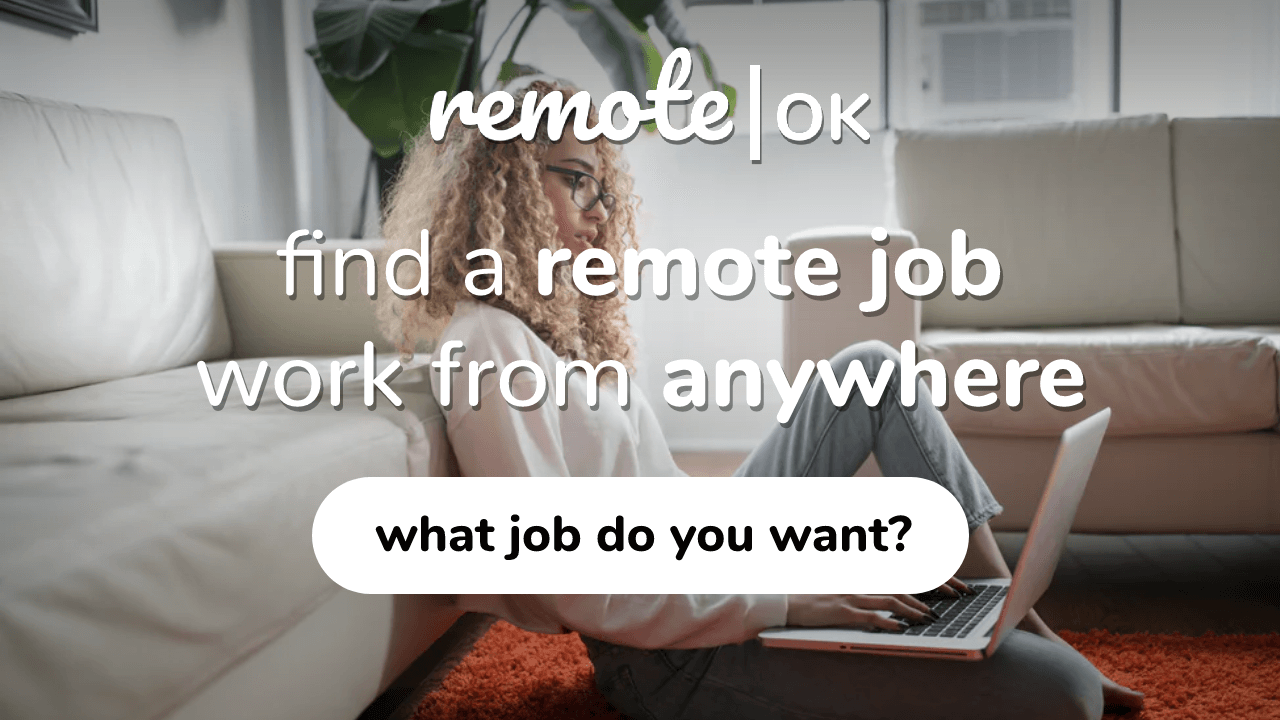
Lean aggregator with filters
- Stronger than global boards on keyword-rich filter pages.
- Remote OK turns search modifiers like salary, timezone, and async work into crawlable discovery surfaces.

ClearanceJobs
United States
Security & Defense

ClearanceJobs
United States
Ultra-specific candidate qualification
Verified clearance audience
- Stronger than global boards on ultra-specific candidate qualification.
- It owns a painful hiring bottleneck, which makes the board useful enough to deserve premium pricing and links.

Dice
North America
Software & Tech

Dice
North America
Deep skill taxonomy
Legacy technical recruiting engine
- Stronger than global boards on deep skill taxonomy.
- Dice stays relevant because it speaks the language of technical recruiters instead of acting like a generic board.

Dribbble Jobs
Global
Design & Creative

Portfolio-first job discovery
- Stronger than global boards on community trust and portfolios.
- The job product works because candidates already use the platform to showcase work, reducing friction for recruiters.
Behance
Global
Design & Creative

Behance
Global
Project-led discovery
Creative network plus jobs
- Stronger than global boards on project-led discovery.
- Behance makes hiring feel native to the platform because the portfolio is the product, not an afterthought.

Authentic Jobs
Remote and major cities
Design & Creative


Curated web and design roles
- Stronger than global boards on strong editorial curation.
- Authentic Jobs proves that curation can be a moat when the audience wants quality over raw listing volume.

Coroflot
Global
Design & Creative


Industrial and product design talent
- Stronger than global boards on portfolio plus resume context.
- Coroflot narrows the audience enough that employers can screen for physical product experience much faster.
Archinect
Global
Architecture

Archinect
Global
Education and news adjacency
Industry media plus jobs
- Stronger than global boards on education and news adjacency.
- Archinect benefits from being part publication, part community, and part hiring marketplace.

Health eCareers
North America
Healthcare

Health eCareers
North America
Credential-sensitive intent
Licensed medical hiring
- Stronger than global boards on credential-sensitive intent.
- This board ranks by owning a hard hiring problem where filters, credentials, and specialization matter immediately.
Nurse.com Jobs
United States
Healthcare

Nurse.com Jobs
United States
Licensing and geography filters
RN and travel nurse focus
- Stronger than global boards on licensing and geography filters.
- Nurse.com is useful because the structure mirrors how nurses actually search: specialty, state, and shift model.

eFinancialCareers
Global finance hubs
Finance

eFinancialCareers
Global finance hubs
Role and certification depth
Banking and capital markets hiring
- Stronger than global boards on role and certification depth.
- The platform stays valuable because it maps tightly to financial job functions and candidate seniority.
Culinary Agents
Major culinary cities
Hospitality


Restaurant and hospitality hiring
- Stronger than global boards on language tailored to kitchens.
- Culinary Agents works because it matches how restaurateurs hire, not how generic HR software thinks they hire.
Rigzone
Global offshore and field work
Energy


Oil, gas, and energy careers
- Stronger than global boards on industry authority and specificity.
- Rigzone shows how a board can dominate by becoming the obvious default resource for a single hard industry.
Ten paying employers is a sales problem, not a software problem.
Kardow gives you the board, the checkout for paid job posts, the SEO pages, and a backfiller covering over 100 countries so the niche never looks empty while you sell the first listings. Plans start at $79/month with 0% platform fees.
Frequently Asked Questions
Is it worth building a niche job board in 2026?
It is worth it when the niche has a bottleneck an employer already pays to solve. The clearest public evidence is DHI Group, which owns both Dice and ClearanceJobs. Through 2025 the general tech board fell 17% to $72.9 million while the single-credential board grew to $54.9 million. If your niche has no equivalent bottleneck, you are just building a smaller Indeed, and that does not work.
How much traffic does a niche job board need to be profitable?
Less than most people assume, because you are selling posts rather than clicks. We Work Remotely lists a standard 30-day post at $299. At that rate a board needs ten paying employers a month to clear $3,000 in monthly revenue. Ten employers is a sales problem, not a traffic problem, and it is why niche boards can be profitable at traffic levels that would be a rounding error for a general board.
How do niche job boards make money in 2026?
Almost all of them charge a flat fee per job post rather than cost per click, in roughly the $200 to $500 band for a single listing, with multi-post bundles discounted. A flat fee works in a niche because the employer can predict the cost before committing, and because the board has already done the filtering that the employer would otherwise pay a recruiter to do.
Which niches do not work?
Niches where the qualifying credential is free to check elsewhere, where a typical employer hires once or twice a year, or where the audience already lives on one dominant platform. General software engineering fails all three tests, which is a large part of why Dice has declined every quarter while narrower boards have not.
How do you get the first jobs on the board?
You backfill. Nobody posts into an empty board, so early inventory comes from imported feeds while you sell the first paid listings alongside it. Kardow ships a backfiller covering ${BACKFILL_COUNTRIES} so the board looks active from day one, and paid posts sit on top of that inventory.